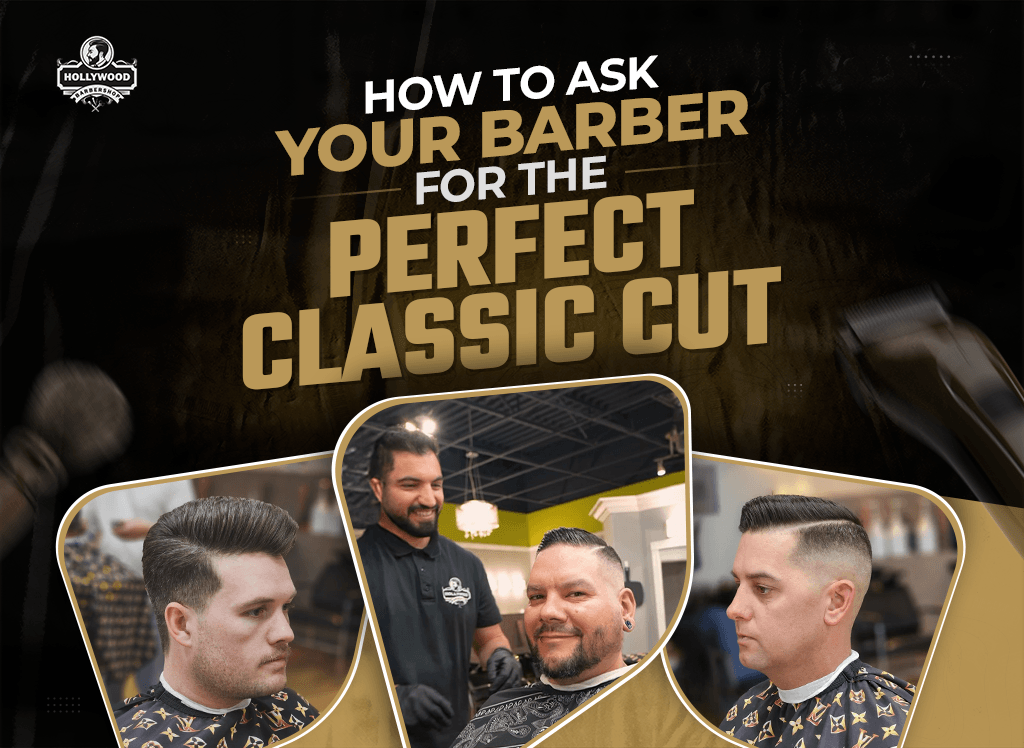
A classic haircut never goes out of style. Whether you’re preparing for a job interview, a wedding, or simply want a clean, professional appearance, a well-executed classic cut is always a smart choice. However, getting the haircut you imagine isn’t just about sitting in the chair—it starts with knowing how to ask a barber for the perfect classic cut.
Many people assume that showing a single photo is enough, but every person’s hair type, head shape, and styling routine are different. Even the same haircut can look completely different depending on these factors.
Before your barber starts cutting, explain your expectations clearly. Talk about the length, how you normally style your hair, whether you prefer scissors or clippers, and what kind of finish you’re looking for. Clear communication is the key to walking out with a haircut you’ll love.
Know What a Classic Cut Means
A classic cut is designed to look neat, balanced, and timeless. Unlike trendy hairstyles that change every season, classic cuts remain stylish year after year.
Traditional, Clean, and Timeless Style
Classic cuts rely on simplicity and structure. The hair on top is left longer (often 3 to 5 inches), the sides and back are tapered or faded into the neckline, and the overall shape follows the natural contours of your head. The goal is sophistication, not trendy edges or dramatic contrasts.
Common Classic Cut Variations
There isn’t just one type of classic haircut. Some common variations include:
- Side Part
- Classic Taper
- Crew Cut
- Ivy League
- Slick Back
- Comb Over
- Scissor Cut
Each version can be customized to suit your hair type and personal style.
Classic Cut vs. Modern Fade
Many people confuse a classic taper with a fade.
| Classic Cut | Modern Fade |
| Gradual transition | Very short to skin |
| Natural appearance | High contrast |
| Longer sides | Extremely short sides |
| Professional look | Trendy look |
| Timeless style | Modern fashion |
If you don’t want an ultra-short haircut, make it clear that you’re looking for a classic taper, not a skin fade.
Start by Explaining Your Preferred Length
One of the biggest reasons people leave unhappy is because they didn’t explain how much hair they wanted to keep.
How Short You Want the Sides
Instead of saying:
“Just make it shorter.”
Try saying:
- Leave about half an inch.
- Use a number 4 guard.
- I want a low taper.
- Keep some weight on the sides.
- Don’t take it too tight.
The more specific you are, the better.
How Much Length You Want to Keep on Top
Tell your barber:
- Keep around 3 inches on top.
- Just trim the ends.
- Leave enough for a side part.
- I still want to brush it back.
- Don’t remove too much bulk.
This helps maintain your preferred style.
Whether You Want the Back Tapered or Left Fuller
Some people prefer:
- Clean tapered neckline
- Fuller natural back
- Rounded finish
- Squared neckline
Discuss this before the haircut begins.
Tell Your Barber How You Style Your Hair
Your daily routine should influence your haircut.
Natural Styling vs. Using Hair Products
Do you let your hair air-dry and fall naturally, or do you use pomade, clay, wax, or gel every morning? This makes a big difference. If you use products, your barber can leave a little more length for hold and texture. If you go natural, they’ll cut to enhance your hair’s natural movement.
Side Part, Brushed Back, or Textured Finish
Describe your preferred style:
- Classic side part
- Slicked back
- Brushed back
- Natural finish
- Light texture
- Comb over
Your barber can shape the haircut around your styling preference.
How Much Time You Spend Styling Your Hair
Be honest about your routine.
For example:
- Less than 5 minutes
- Around 10 minutes
- Willing to style daily
- Prefer wash-and-go hair
This helps determine how much texture and layering to add.
Talk About the Sides and Back
The sides and back define the overall shape of a classic haircut.
Tapered Sides: This is the most common request. Tapering means the hair gradually shortens from the top of your head down to your neckline. To avoid confusion, clarify the starting point. Saying “skin fade” means it goes down to the scalp at the bottom, while “number 2 taper” leaves a bit more stubble.
Scissor-Cut Sides: If you want a more traditional, gentlemanly look, specify “scissor over comb” for the sides. This keeps the hair denser and less severe than a clipper cut, offering a softer blend and a more classic finish.
Clean Neckline Options: Be specific about how you want your neckline shaped. A “blocked” or “square” neckline creates a sharp, geometric finish often preferred for professional environments. A “rounded” neckline offers a softer, more natural edge. Some barbers will also taper the nape, blending the hair out completely for a subtle look.
How to Avoid Getting a Cut That Is Shorter Than Expected:
Helpful tips include:
- Say “leave more length than you think.”
- Start longer—you can always remove more.
- Ask the barber to show the first cut.
- Confirm the clipper guard before cutting.
- Mention any past haircut disappointments.
Explain How You Want the Top
The top determines how your hairstyle looks every day.
Keep It Classic and Neat
Ask your barber for:
- A clean, well-balanced shape
- Even layers throughout the top
- Natural movement without excessive volume
- Easy everyday styling
- Moderate length that suits your face shape
This approach creates a polished hairstyle that’s appropriate for work, formal events, and everyday wear.
Ask for Texture or a More Natural Finish
Adding texture can:
- Reduce excess bulk in thick hair
- Improve natural movement
- Make daily styling quicker and easier
- Create a softer, less rigid appearance
- Help the haircut grow out more naturally
If you’re looking for a professional business haircut, ask your barber for light texture only. This keeps the haircut neat while avoiding a choppy or overly casual look.
Discuss How Much Length Should Stay Around the Front
Tell your barber if you want enough front length for styles such as:
- A classic side part
- A quiff
- A brushed-back hairstyle
- A comb over
- A natural fringe
Being specific about the front length helps your barber leave enough hair where you need it while still maintaining the clean, classic shape you’re after. If you’re unsure, mention how you normally style your hair each morning so your barber can recommend the ideal length.
Use the Right Barber Terms
Here are the essential terms you need to know.
- Taper: A taper gradually shortens the hair from the top down to the neckline and sideburns. It creates a clean, blended look without a harsh line. Say: “Give me a medium taper on the sides and back.”
- Scissor cut: Scissor work is used for precision and texture on top. Clippers create uniformity; scissors create movement and shape. Say: “Use scissors on top for a more natural, textured finish.”
- Side part: A side part creates a clean, defined line on one side of the head. It’s classic, professional, and frames the face. Say: “I want a deep side part on the left.”
- Neckline: The neckline is where your hair meets your neck. A squared neckline is modern and sharp; a rounded neckline is softer and more traditional. Say: “Square the neckline off, please.”
- Texture: Texture adds movement and prevents a heavy, blocky look. It’s created by point-cutting or using thinning shears. Say: “Add some texture on top to keep it from looking too heavy.”
- Natural finish: A natural finish means the hair lies smoothly without looking stiff or overly styled. It’s ideal for classic, everyday looks. Say: “I want a natural finish—nothing too stiff or shiny.”
Using these terms will help you and your barber speak the same language, ensuring the classic cut you envision becomes a reality.
Bring a Reference Photo
Pictures are extremely helpful—but they should support your explanation, not replace it.
Choose a Photo That Matches Your Hair Type
Pick someone with hair similar to yours:
- Straight hair
- Wavy hair
- Thick hair
- Fine hair
- Curly hair
Choosing a realistic example makes it easier for your barber to adapt the style to suit your natural hair instead of trying to recreate a look that’s difficult to achieve.
Show Front, Side, and Back Views When Possible
Multiple angles help your barber understand:
Whenever possible, bring photos showing the:
- Front view
- Side profile
- Back view
These images help your barber understand the haircut’s:
- Overall shape
- Hair length
- Taper or fade
- Neckline design
- Volume and balance
The more visual information your barber has, the easier it is to deliver a haircut that closely matches your expectations.
Explain What You Like About the Photo
Instead of saying,
“I want this haircut.”
Say:
- “I like the side taper.”
- “I’d like to keep this much length on top.”
- “I like how natural the neckline looks.”
- “I’d like this amount of texture.”
- “I want the haircut to look clean but easy to style.”
This avoids misunderstandings.
Consider Your Hair Type and Face Shape
Every haircut should be customized.
Straight, Wavy, and Thick Hair
Different hair types behave differently.
Straight Hair
- Holds side parts well
- Clean appearance
- Easy to style
Wavy Hair
- Adds natural movement
- Creates volume
- Great for textured classic cuts
Thick Hair
- May require thinning
- Benefits from texture
- Needs careful shaping
How Hair Growth Patterns Affect the Final Look
Your hair grows in specific directions—cowlicks, whirls, and natural partings. These patterns affect how your hair lies and how a cut settles. A classic cut must work with these patterns, not against them. Your barber will study your growth patterns before cutting to ensure the final style falls naturally and is easy to maintain.
Ask Your Barber What Works Best for Your Hair
Don’t hesitate to ask:
- Will this suit my hair?
- Will it be easy to maintain?
- Should we leave more length?
- Will it grow out well?
Professional advice often improves the final result.
Ask Questions Before the Cut
A short conversation beforehand can prevent disappointment.
Useful questions include:
- How short would you recommend for my face shape and hair type?
- Should we use scissors, clippers, or a combination of both?
- How will this haircut look as it grows out?
- What styling product works best for this classic cut?
- How often should I come back for maintenance?
- Will this style work well with my natural hair type and texture?
These questions help ensure you’re both on the same page.
Check the Cut Before You Leave
Always inspect your haircut before leaving the chair.
Look at the sides and back: Turn your head from side to side and check the blending. The fade or taper should transition smoothly without any harsh lines. Run your fingers lightly over the sides and back to feel if the hair is even. Any unevenness is easier to fix while you are still in the chair.
Check the neckline and around the ears: The neckline should be sharp and symmetrical, sitting at the natural hairline. Look for any stray hairs left behind around the ears and sideburns. A clean neckline and crisp ear lines are what separate an amateur job from a professional one.
Make sure the length and shape match what you discussed: Compare the result to the reference photo or description you gave. If you asked for a classic taper, check that the top has the right length and the sides are graduated as expected. If something looks slightly off, do not hesitate to speak up—barbers expect this and would rather correct it than leave you unsatisfied.
Conclusion
Learning how to ask a barber for the perfect classic cut is one of the easiest ways to improve your haircut experience. Clear communication about the length, taper, top, neckline, and styling preferences helps your barber create a haircut that matches your expectations.
While reference photos are helpful, explaining exactly what you like about them leads to even better results. Combine that with basic barber terminology and an understanding of your own hair type, and you’ll enjoy more consistent, flattering haircuts.
For future appointments, save photos of your favorite haircut and make note of details such as clipper guard numbers, top length, taper style, and preferred finish. Bringing those details to your next visit makes it much easier for your barber to recreate the perfect classic cut every time.